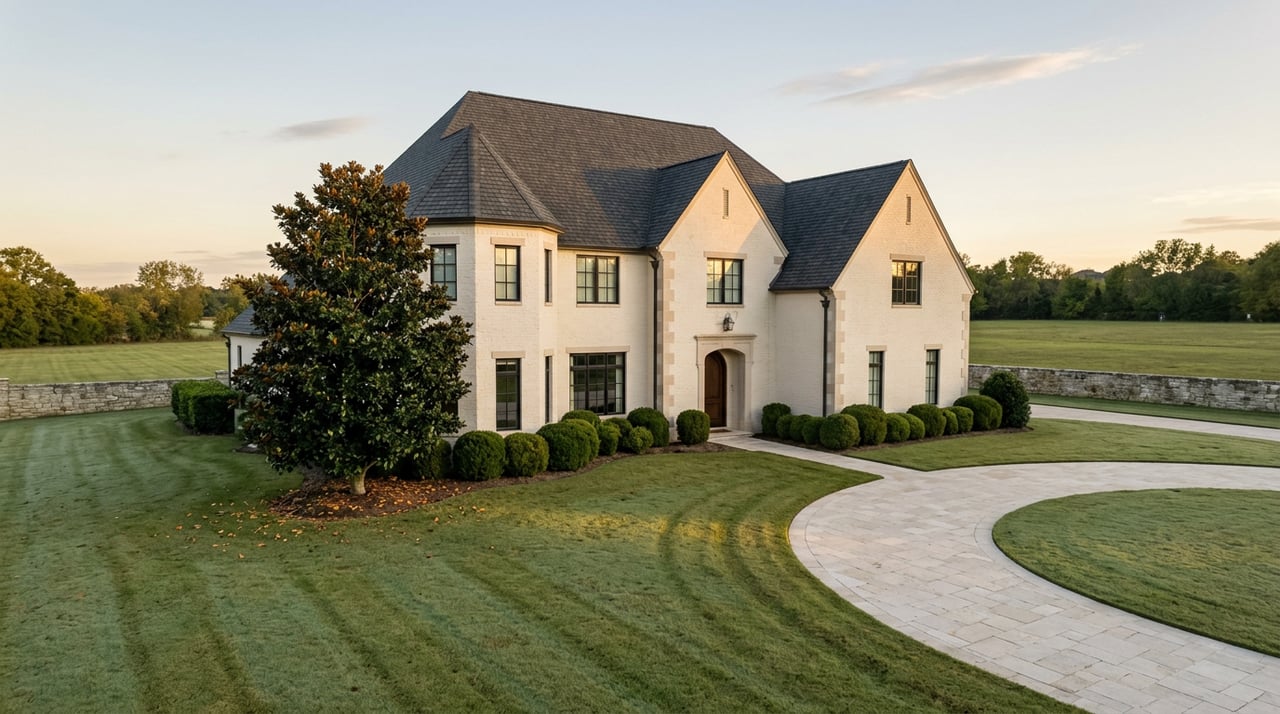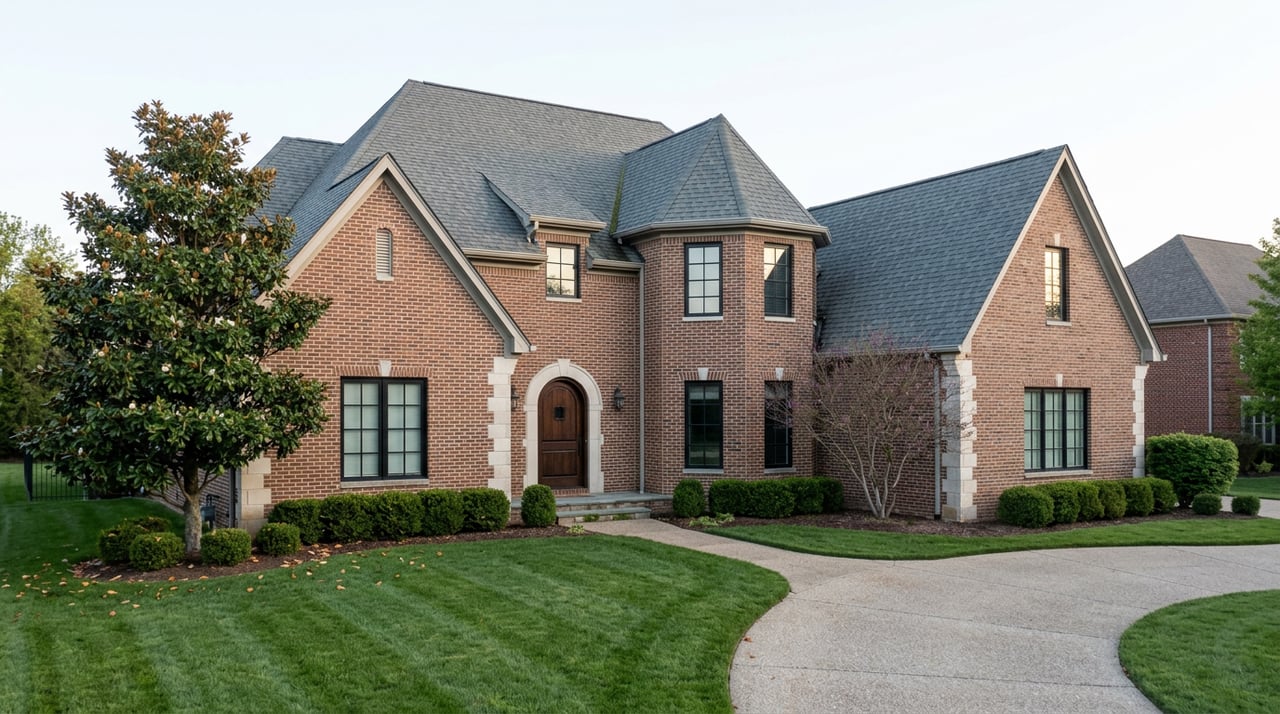
A seller in Westfield called us this spring holding a comp sheet that made no sense. Her three-bedroom brick ranch, immaculate, freshly painted, backed up to a greenbelt, was pricing out below a brand-new home two streets over with the same square footage and a smaller lot. She had done everything right. She had just never sold a house next to an active construction site before.
Here is what she was missing. The new home's number on the tax record was not the whole transaction. The builder had quietly covered part of the buyer's closing costs and bought down their mortgage rate for the first two years, the kind of concession that never shows up as a lower list price but absolutely shows up in what that buyer was willing to pay. Her house was competing against a number that had already been softened before it hit the MLS.
Two Different Sellers Are Standing in the Same Subdivision
In a Gallatin neighborhood where a builder is still active, there are really two sellers operating side by side. One is a homeowner who wants to protect equity and needs the sale price to reflect the home's actual value. The other is a builder who needs to move inventory on a schedule and has more tools to do it quietly: a rate buydown, a closing cost credit, a design credit that effectively lowers the real cost of the home without touching the number that gets recorded.
Earlier this year, Southeastern Building Corporation, the primary builder in Westfield, was advertising $11,500 in incentives on select homes, typically applied toward closing costs or a rate buydown through their preferred lender. Wheeler Construction, also building in Westfield on Blantons Park Drive, was offering up to $10,000 toward closing costs on their homes there around the same time. Neither of those figures shows up as a price cut on the tax record. Both change what the buyer actually paid for the house, and both are the kind of number that shifts from month to month, so the specific dollar amount matters less than the pattern: builders have room to discount that a homeowner selling next door simply does not have.
A subdivision with an active builder is not one market. It is two: what a homeowner can get for a house, and what the builder is currently willing to give away to move the next one.
That is the mechanism worth understanding before you set a list price or make an offer anywhere near active construction in Gallatin.
Where This Shows Up in Gallatin
New construction is not a small slice of this market. Over the 12 months ending in spring 2026, 572 newly built homes closed in the 37066 zip code, accounting for 38 percent of all residential sales in the city. That is one of the higher new-build concentrations in the Nashville metro, and it means comps in a lot of Gallatin subdivisions are being set, at least in part, by builder pricing decisions rather than pure buyer-to-buyer competition.
It also produces a number that looks backwards at first glance. The median sale price across all new construction over that same period was $405,212, well below the broader Gallatin single-family median of $474,950. That gap exists mostly because townhome and attached-product sales pull the new-construction number down. Single-family new builds alone carried a higher median of $457,490, reflecting the premium buyers pay for a site-built home on its own lot. But even that figure sits close to, not above, the resale median, which tells you something: builders are pricing to move, and where they cannot cut the sticker price without disrupting future phases, they lean on the incentive side instead.
Subdivisions still under active construction in Gallatin right now include Westfield off Big Station Camp Boulevard, The Paddock at Kennesaw Farms with its all-brick single-level product, Woods Crossing, and Cumberland Landing, the newest entrant with homes built in 2025 and 2026. If you are buying or selling near any of these, the builder is part of your pricing conversation whether you asked for that or not.
| Subdivision | Construction Status | What It Means for Your Comps |
|---|---|---|
| Westfield | Active (Southeastern Building Corp, Wheeler Construction) | Builder incentives have been part of the picture here this year; ask what buyers actually paid, not just what they closed at |
| The Paddock at Kennesaw Farms | Active | New brick inventory still being released; builder pricing influences the block |
| Woods Crossing | Active, built 2025 to 2026 | Too new for a deep comp history; builder is the dominant price-setter |
| Cumberland Landing | Active, built 2025 to 2026 | Newest phase in the market; low HOA is a builder draw, not a resale signal yet |
| Carellton | Built out | Resale sellers compete only with each other |
| Fairway Farms | Built out | Clean comp pool, no builder variable |
| Kensington Downs | Built out | Predictable resale floor |
| Twin Eagles | Built out | Predictable resale floor |
| Cambridge Farms | Built out | Predictable resale floor |
What Changes When the Builder Leaves
Once a subdivision is fully built out, this entire dynamic disappears. Carellton, Fairway Farms, Kensington Downs, Twin Eagles, and Cambridge Farms are largely built out in Gallatin, and their resale floors are more predictable for exactly one reason: there is no builder in the neighborhood offering a rate buydown to compete against. Sellers there are measured against other homeowners, on equal footing, in a market where the sale price on the settlement statement really does mean what it looks like it means.
That is not a small distinction if you are deciding where to buy for a longer hold, or where to list if you already own. A built-out subdivision gives you a cleaner read on what your specific floor plan and lot type are actually worth, because every comp in the pool was set by a buyer and seller negotiating without a third party subsidizing the deal.
The HOA Number Is Telling the Same Story From a Different Angle
There is a second data point that lines up with this pattern. Over a comparable 12-month period ending in spring 2026, homes with an HOA in Gallatin sold at a median of $434,990, compared to $384,900 for homes without one, a gap of roughly $50,000. That is not simply an amenities premium. It tracks closely with newer construction, since new subdivisions are far more likely to carry an HOA than the older, established neighborhoods near the square. Part of what that $50,000 gap is measuring is the same builder-driven pricing environment showing up in a different column of the spreadsheet.
What This Means Before You Set a Number
If you are selling a resale home next to an active builder, do not assume the builder's closed sales are directly comparable to yours without asking what came with them. A buyer's agent or your listing agent can usually find out whether a recent nearby new-construction closing included a rate buydown or a closing credit, because those concessions typically show up on the closing disclosure even when they do not touch the list price. That distinction should shape how you price against it.
If you are buying new construction, treat the incentive as part of the real price, not a bonus. A $10,000 closing cost credit changes your actual cash-to-close. A rate buydown changes your real monthly payment for the period it covers. Compare the total cost of ownership across builders and against nearby resale options, not just the number on the price sheet.
If you are buying resale in a subdivision that still has active construction, ask how many phases are left. A neighborhood with one more phase to go behaves differently than one with five, because the builder's pricing leverage over your future resale value shrinks as their inventory shrinks.
A Short FAQ
Does a builder incentive count as a lower sale price for appraisal purposes? Appraisers are supposed to adjust for seller concessions when they use a new-construction sale as a comp, but the adjustment does not always happen cleanly at the local level. This is one more reason a resale seller near active construction should not simply average nearby closed prices without checking what concessions were included.
How long does a subdivision typically stay in the builder-competing phase in Gallatin? It depends entirely on how many lots remain and how quickly the builder is releasing them, which varies by community and by builder. Newer entrants like Woods Crossing and Cumberland Landing, both built in 2025 and 2026, are still early in that cycle.
Does this affect the whole city, or just a few neighborhoods? It is concentrated wherever construction is active. Gallatin's overall market closed 1,483 homes over the 12 months ending in July 2026 at a median sale price of $429,990, up about 4 percent from $413,342 a year earlier, a steady, normal pace rather than the sharp swings of a few years ago. But that citywide median blends builder-active subdivisions with fully resale ones, which is exactly why a single number cannot tell you what your specific street is doing.
If you are trying to figure out whether the home you are looking at, or the one you are about to list, is sitting in a builder-active pocket of Gallatin or a settled resale one, that is a conversation worth having before a number goes on paper. Kim Rowland at Oak Leaf Real Estate has spent years reading exactly this kind of local detail into contracts and comps across Sumner County. Let's grab some coffee and start your real estate journey.